On Judging Men and Angels

In 1 Cor. 6:2-3 is an amazing truth: “Do you know not that we will judge the world…. Do you not know that we will judge angels?”

Christians will judge the world? Judge Angels?

That’s extraordinary!

But, why would humans in any sense be qualified to judge others—humans
or angels?

The answer is simple: those with the least amount of evidence of God’s goodness and power who, nonetheless, continue to honor Him are always in a position to judge those who had even more evidence but disobeyed.

Consider Jesus’ words in Luke 11:29-32:

This is a wicked generation. It asks for a miraculous sign, but none will be given it except the sign of Jonah. For as Jonah was a sign to the Ninevites, so also will the Son of Man be to this generation. The Queen of the South will rise at the judgment with the men of this generation and condemn them; for she came from the ends of the earth to listen to Solomon’s wisdom, and now one greater than Solomon is here. The men of Nineveh will stand up at the judgment with this generation and condemn it; for they repented at the preaching of Jonah, and now one greater than Jonah is here.1

See what I mean?

The Ninevites repented because some guy named Jonah happened to walk through their city warning them of coming destruction. Similarly, the Queen of the South traveled a great distance to meet a wise man named Solomon of whom she had only heard rumors. Thus, Jesus says that the Queen of the South and the Ninevites will rise up at the Judgment and condemn those who witnessed His miracles and yet rejected Him because they are without excuse.

Again, those with little evidence who still believe can rightfully condemn those who had more evidence but don’t believe.

It is the same with the fallen angels. Even though angels actually saw God, some rebelled, and so Christians who had much less evidence for God can rightfully condemn those who had much more evidence yet disobeyed.

And what is the complaint of today’s skeptic? Isn’t it, “God didn’t give us enough evidence!”? Well, those who obey God in this life, even though they are ridiculed for those beliefs (and many are even being beaten, tortured, and murdered for their belief), are in the rightful position to condemn those at the Judgment who said, “but we needed more evidence.”

In the meantime, the world has been given the sign of Jonah: Jesus was crucified by a crowd that always asked for more evidence, but then He was raised from the dead. His resurrection is the sign that He is who He said. So you, Christian, may find yourself standing before God at the Judgment and hear the skeptic complain that there wasn’t enough evidence and you can say, “I saw the same evidence you did and still believed and it turns out that, indeed, my beliefs were justified!”

“For he has set a day when he will judge the world with justice by the man he has appointed. He has given proof of this to all men by raising him from the dead.” When they heard about the resurrection of the dead, some of them sneered, but others said, “We want to hear you again on this subject.” At that, Paul left the Council. A few men became followers of Paul and believed. Among them was Dionysius, a member of the Areopagus, also a woman named Damaris, and a number of others. (Acts 17:31-34)

Amen.


  1. See also Matt. 11:20-24. In that passage we find that those with less evidence who refused to believe will have it easier on the Day of Judgment than those who had more evidence but refused to believe. []
Posted in Apologetics, Why God Allows Evil | Tagged , , , , , | Comments Off

On Humiliating Satan

Since I teach on why God allows evil, I often talk about Job. I have learned that many Christians have missed a major lesson of that book, if not the major lesson. Although many rightly conclude from Job that we should be humble when it comes to why God allows this or that suffering, there is something else amazing found in the book’s beginning.

In the first chapter we learn that Job is the wealthiest man in the world, renowned, and that he worships God.

But then we are told of a great contest in Heaven.

One day the angels presented themselves before the Lord and Satan came along with them and the Lord asked Satan:

“Have you considered my servant Job, that there is none like him on the earth, a blameless and upright man, who fears God and turns away from evil?” Then Satan answered the LORD and said, “Does Job fear God for no reason? Have you not put a hedge around him and his house and all that he has, on every side? You have blessed the work of his hands, and his possessions have increased in the land. But stretch out your hand and touch all that he has, and he will curse you to your face.” (Job 1:8-11)

Here Satan contends that Job only serves God because God has given Job everything he wanted and that If God didn’t give Job what he wanted then Job would rebel.

Well, the Lord tells Satan that Satan can destroy all the things Job enjoys. Soon disaster kills his family, marauders steal his possessions, Satan afflicts him with boils, and Job’s wife tells him to “curse God and die.”

And here’s the question I ask my students: “what was the only thing that Job had to do to humiliate Satan in front of God and all God’s servants?”

The answer is simple: the only thing Job had to do to humiliate Satan in front of God and all the beings of the heavenly realm was to continue to honor God. As long as Job honored God, he humiliated Satan.

Satan would be humiliated because it would not only prove him wrong but, even more importantly, it would prove that some beings will serve God even if their lives are miserable.

And this would justify God’s final judgment of Satan! After all, why did Satan rebel? Isn’t it because Satan thought he deserved more? The implication is, “If you gave me everything I had ever wanted, then I wouldn’t have rebelled either.” Isn’t it Satan’s underlying argument that no one will serve God if He deprives them of what they value? Satan certainly believed that was the case with Job.

So, like Job, when our life gets very hard, if we get fired, or our finances tank, or we get cancer, but we still honor God then we too humiliate Satan.

And, of course, all of us, unless we die first, will get life threatening news which can be our finest hour! What I mean is that our finest hour isn’t getting a promotion or sitting on the beach in Kauai; our finest hour is when we get life shattering news, and our family and friends and acquaintances and the Heavenly host are watching, and we continue to honor God anyway!

When we do this, when we honor God in hardship, then we too humiliate Satan.

Eph. 3:10: “His intent was that now, through the church, the manifold wisdom of God should be made known to the rulers and authorities in the heavenly realms.”

Amen.

Posted in Apologetics, Why God Allows Evil | Tagged , , , , , | 6 Comments

God or “We Got Lucky”

So how did the universe, and all the complexity we find in living things, arise? There are only two explanations: God or luck. Now, if the Darwinists are correct, this luck is operated on by natural selection but don’t let that fool you: natural selection is still working upon lucky mutations. For the naturalist luck is still at the bottom of the origin of the universe, the origin of life, and the complexity found in living things. Naturalism is, at its core, based upon luck. 

I’m going to just pass on some quotes with little commentary.

Luck and the Origin of Life

Richard Dawkins: “We can accept a certain amount of luck in our explanations, but not too much…. We can allow ourselves the luxury of an extravagant theory [regarding the origin of life on our planet], provided that the odds of coincidence do not exceed 100 billion billion to one [10-20].”1

Dawkins:  “Brilliant physicist and cosmologist”2 Fred “Hoyle said that the probability of life originating on Earth is no greater than the chance that a hurricane, sweeping through a scrapyard, would have the luck to assemble a Boeing 747. Others have borrowed the metaphor to refer to the later evolution of complex living bodies, where it has a spurious plausibility.”3 Thus, we are just crazy-lucky that life began.

Luck and the Evolution of Complex Biological Systems

Richard Dawkins:

Evolution is very possibly not, in actual fact, always gradual. But it must be gradual when it is being used to explain the coming into existence of complicated, apparently designed objects, like eyes. For if it is not gradual in these cases, it ceases to have any explanatory power at all. Without gradualness in these cases, we are back to miracle, which is simply a synonym for the total absence of explanation. The reason eyes and wasp-pollinated orchids impress us so is that they are improbable. The odds against their spontaneously assembling by luck are odds too great to be borne in the real world. Gradual evolution by small steps, each step being lucky but not too lucky, is the solution to the riddle. But if it is not gradual, it is no solution to the riddle: it is just a restatement of the riddle.4

Notice here that even after life began it is still a matter of luck. Granted that for the Darwinist this luck is operated on by natural selection but the chance mutations themselves are still the result of luck. Consider one example of how lucky. Francis Crick won a Nobel Prize as the co-discoverer of the double helical nature of DNA (what follows is a little long but well worth it):

To produce this miracle of molecular construction [a polypeptide chain] all the cell need do is to string together the amino acids (which make up the polypeptide chain) in the correct order. This is a complicated biochemical process, a molecular assembly line, using instructions in the form of a nucleic acid tape (the so-called messenger RNA)…. Here we only need to ask, how many possible proteins are there? If a particular amino acid sequence was selected by chance, how rare an event would that be? This is an easy exercise in combinatorials. Suppose the chain is about two hundred amino acids long; this is, if anything rather less than the average length of the proteins of all types. Since we have just twenty possibilities at each place, the number of possibilities is twenty multiplied by itself some 200 times. This is conveniently written 20200 and is approximately equal to 10260, that is, a one followed by 260 zeros! This number is quite beyond our everyday comprehension. For comparison, consider the number of fundamental particles (atoms, speaking loosely) in the entire visible universe, not just our own galaxy with its 1011 stars, but in all the billions of galaxies, out to the limits of observable space. This number, which is estimated to be 1080, is quite paltry by comparison to 10260. Moreover, we have only considered a polypeptide chain of a rather modest length. Had we considered a longer one as well, the figure would have been even more immense.5

Of course, 10260 is really, seriously, unbelievably, crazy-lucky. And, again, this is just for one polypeptide chain “of a rather modest length”!

No wonder Crick wrote that “Biologists must constantly keep in mind that what they see was not designed, but rather evolved.”

Francis Crick, of course, realized that 10260 was indeed way too lucky so with Leslie Orgel they came up with a new solution:

It now seems unlikely that extraterrestrial living organisms could have reached the earth either as spores driven by the radiation pressure from another star or as living organisms imbedded in a meteorite. As an alternative to these nineteenth-century mechanisms, we have considered Directed Panspermia, the theory that organisms were deliberately transmitted to the earth by intelligent beings on another planet.”6

In other words, Crick had argued that extraterrestrials designed life and sent it here.7 Of course, Darwinists believe that these extraterrestrials would have also evolved through natural selection working on luck so we are still back to luck. So, at the bottom of it all it comes down to two possible explanations for the Universe: it arose from God or we’re just lucky. Very, very, very, very, times a centilllion (that’s a 1 with 303 zeros after it) lucky.

Romans 1:19-20: “For what can be known about God is plain to them, because God has shown it to them. For his invisible attributes, namely, his eternal power and divine nature, have been clearly perceived, ever since the creation of the world, in the things that have been made. So they are without excuse.”

Amen.

  1. Richard Dawkins, The Blind Watchmaker: Why the Evidence of Evolution Reveals a Universe Without Design (New York, W. W. Norton, 1996), 139, 145-146. []
  2. Richard Dawkins, The God Delusion (Boston: Houghton Mifflin, 2008), 142. []
  3. Ibid., 138. Although Dawkins later said that Hoyle’s illustration was based on Hoyle having a ”misunderstanding,” (142) Dawkins makes this statement in the context of natural selection not the origin of first life. Of course Hoyle wasn’t trying to argue that the statistical probablily of first life arising was mathmatically calcuable to a 747 being assembled in a junk yard by a tornado but only that first life assembling by chance is extremely improbable and Dawkins doesn’t disagree. Rather, Dawkins, in The God Delusion, is arguing that God is even more improbable than that. []
  4. Richard Dawkins, River Out of Eden: A Darwinian View of Life (New York, NY: Basic Books, 1995), 83-84. []
  5. Francis Crick, Life Itself: Its Origin and Nature (New York: Simon and Schuster, 1981), 51-25. Emphasis his. []
  6. F. H. Crick, L. E. Orgel, (1973). “Directed Panspermia,” Icarus 19: 341–348. []
  7. Crick later regretted the ET explanation but that he would feel the need to resort to it in the first place is the point. []
Posted in Apologetics, Intelligent Design | Tagged , , , , , , , | 8 Comments

Women’s “Liberation” and Female Unhappiness

A major study has concluded that women have become increasingly unhappy.1

By many objective measures the lives of women in the United States have improved over the past 35 years, yet we show that measures of subjective well-being indicate that women’s happiness has declined both absolutely and relative to men. The paradox of women’s declining relative wellbeing is found across various datasets, measures of subjective well-being, and is pervasive across demographic groups and industrialized countries. Relative declines in female happiness have eroded a gender gap in happiness in which women in the 1970s typically reported higher subjective well-being than did men. These declines have continued and a new gender gap is emerging—one with higher subjective well-being for men.

But how, how could this be?

I’ll give you three reasons for now.

Abortion. The pro-choice movement says, “It’s not a baby, it’s a clump of cells” and, sadly, many millions of women who have aborted their babies are beginning to realize that was a colossal lie. What’s convincing them isn’t mysticism, nor misogynism, nor even religion, but science (okay, maybe a little religion because religion tells us it’s wrong to kill people—science doesn’t tell us that). As these women later have ultrasounds for wanted clumps of cells they confront the startling realization that it is and was a baby after all! But after 50 million USA abortions, many millions of women NOW live with the guilt of killing their baby.  

Let me add, though, that if you have had an abortion (or encouraged one), you can find complete forgiveness in Jesus.

The diminishment of motherhood. Many a woman’s libber has proclaimed that girls shouldn’t be satisfied with being a wife and mother. In fact, that’s beneath them. That’s giving into the Man who wants to keep them barefoot, pregnant, and in the kitchen. To reach their true potential they need to become the vice-president or even president (think of it!) of some company that makes or sells something. After all, they can still spend carefully parceled “quality time” with their children! Sadly, however, and contrary to many NOW proclamations, it has turned out that a lot of women actually like being stay-at-home moms and they resent being looked down upon.

Porn. The prevalence of ever more perverted pornography fosters female unhappiness. This is for three major reasons.

First, porn makes women less valuable to men, which alters the balance of power between the sexes. This is true because sex is a powerful motivator.2 Consider that not too many years ago if a man wanted to see a woman naked, he pretty much had to marry one. But now any man so disposed can see countless women naked on monitors, screens, or stages. Marriage is less needed by men and that’s bad for women who want to marry.     

Second, porn makes men want their wives or girlfriends to act and look like porn stars and “liberated” women hear and obey. Consider this month’s Cosmopolitan cover stories (this is gross but everyone who can read sees their titles at every supermarket checkout): “78 Ways to Turn Him On” is followed by “What Men Want Most at 9 p.m.,” then there’s the all-important, “Bump-Proof Your Bikini Line.” If these don’t work, it might be because you’re too normal so there’s the article, “The Weird Trait Guys Look For in a Date.” But if this cornucopia of collected kowtow craziness fails to land the guy of a woman’s dreams there’s the plan-B article entitled: “4 Fab New Vibrators.” Wow, do Cosmo editors think of everything or what?

Does this sound like Cosmo is helping free women of male domination?

And how impossible is it for a woman to forever look like an almost underage porn star?  No wonder anorexia and bulimia abound and cosmetic surgery is de rigueur.  

Third, all of this, of course, has led many women to believe that if they don’t give themselves sexually to a man before marriage, that he won’t ever marry her. That’s backward. No wonder boys are now slow to become men! They know they don’t have to have a responsible job to buy the cow since they get the milk for free. This is why many women who have sex “no strings attached” soon start smoking Virginia Slims and sporting bumper stickers that say “The more I get to know men, the more I like my dog.”

It strikes me as odd that many liberals who chatter about women’s rights ardently support what hurts women. Sadly, today’s “liberated” woman is in more bondage than before the women’s lib movement began.

Christianity is the true liberator of women because in Christ “there is neither male nor female, for you are all one in Christ Jesus.”3

Amen.

  1. Betsey Stevenson and Justin Wolfers, “The Paradox of Declining Female Happiness,” http://bpp.wharton.upenn.edu/betseys/papers/Female_Happiness.pdf. Accessed 22 June 2011. []
  2. I don’t know where I first read this. []
  3. Gal. 3:28. []
Posted in Psychology, Sex, Uncategorized, Women | Tagged , , , , , , , , , , , , | 3 Comments

Two Diminished Doctrines = Many Puny Christians

Sound the alarm and bar the door! We’ve been robbed! Two doctrinal jewels are missing: human depravity and the Christian’s glorification.

But I wonder how many Christians consider them jewels? After all, who likes to talk about the depths of human sinfulness (“Yes, I know we’re all sinners, blah-blah-blah”)? And eternity sounds tedious (we’re not going to be sporting flightless wings and playing harps, by the way).

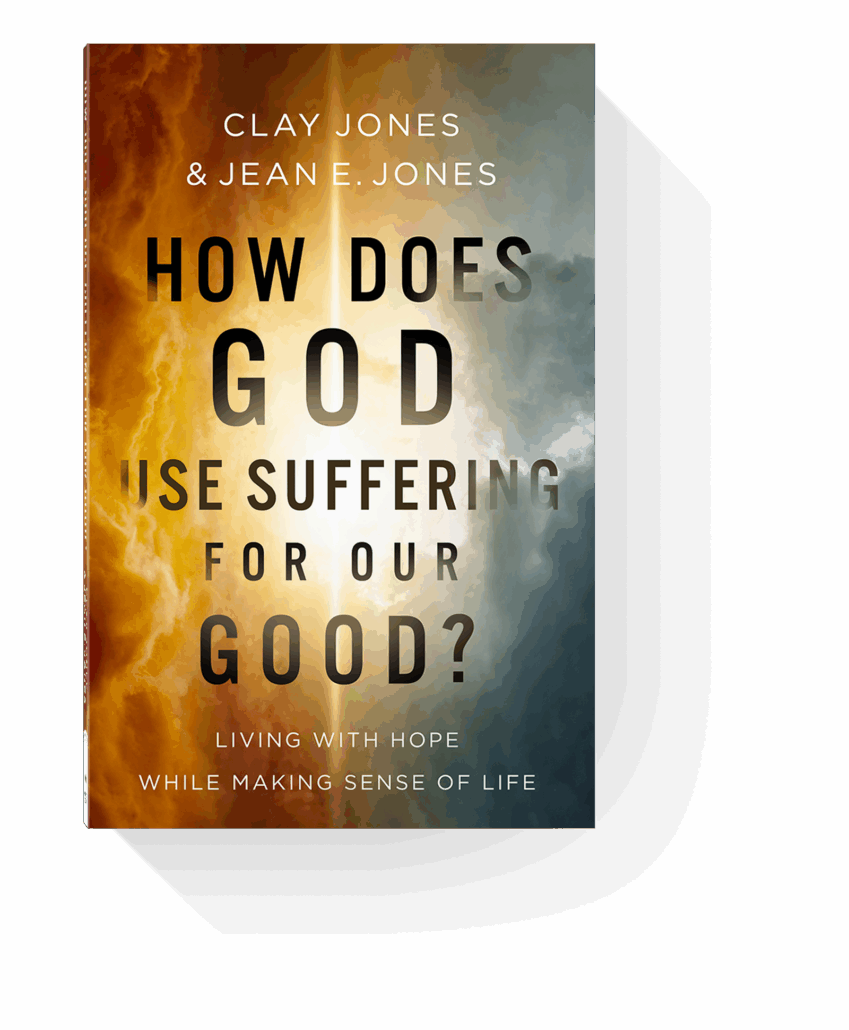
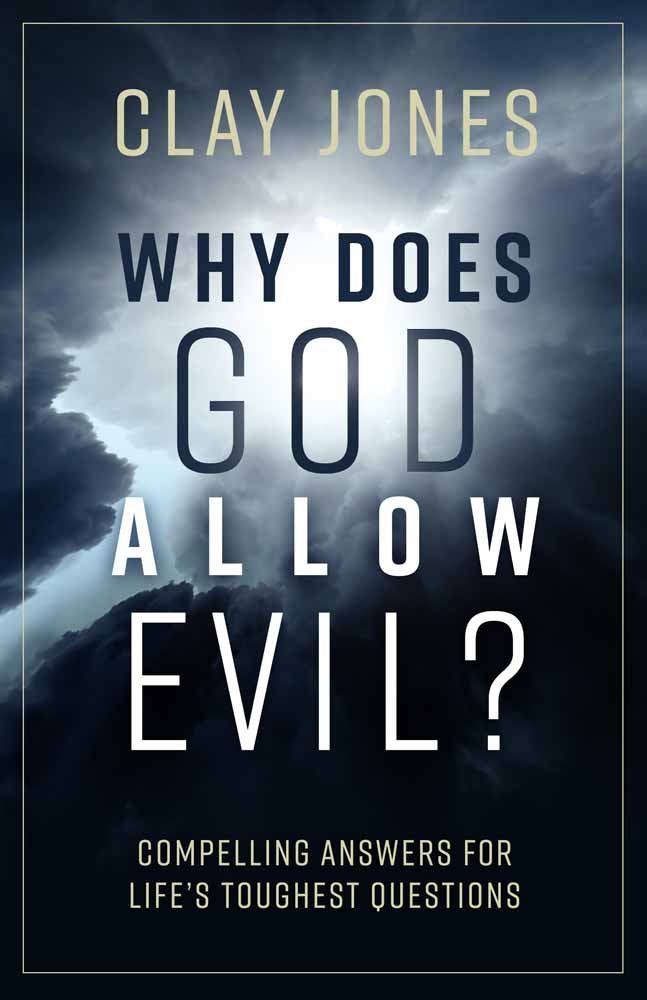
Well, as many of you know, I’ve been studying and teaching on why God allows evil for many years and long ago I realized that the absence, or at least diminishment, of these two doctrines is the primary, and I do mean primary, reason that many Christians say we can’t know why God allows evil.

But there’s more.

A weak, beggarly understanding of these two doctrines is the chief reason that many a Christian’s life is so lack-luster. So dim. So puny, so paltry, so pantywaist, that a one-legged, 97 pound weakling could kick the stuffing out of it.

But seriously, to the extent that Christians don’t understand the depth of sin or the significance of our glorious eternal inheritance, they are spiritually hobbled.

Indeed, D. Martyn Loyd-Jones, the famous expositor of Westminster Chapel, wrote, “Most of our troubles are due to the fact that we are guilty of a double failure; we fail on the one hand to realize the depth of sin, and on the other hand we fail to realize the greatness and the height and the glory of our salvation.”

Loyd-Jones is right.

So today I’m adding to the Resources section of this blog an article I presented at the 2009 annual meeting of the Evangelical Theological Society that was entitled “We Don’t Take Human Evil Seriously so We Don’t Understand Why We Suffer.” In it I examine the theology, examples (warning: there is some unsettling information in this section), studies, reflections of researchers and victims, and what the Scripture says about human goodness and evil. I encourage you to read it. I end it with twelve ways a deeper understanding of human sinfulness benefits the Christian.

As for the glories of Heaven, I’m also adding to the Resources page an in-progress chapter I’m writing entitled “Reigning with Christ.” By the way, when I teach on Why God Allows Evil at Biola, I end the course talking about the glories that await us in Heaven. This topic isn’t given the time it needs in most works on why God allows evil and that’s too bad. C. S. Lewis was right that “Scripture and tradition habitually put the joys of Heaven into the scale against the sufferings of earth, and no solution of the problem of pain that does not do so can be called a Christian one.”

I discuss both of these in an interview with Brian Auten of Apologetics 315.

Of course, much more needs to be said.

2 Corinthians 4:17-18:  “For this light momentary affliction is preparing for us an eternal weight of glory beyond all comparison, as we look not to the things that are seen but to the things that are unseen. For the things that are seen are transient, but the things that are unseen are eternal.”

Amen.

Posted in Apologetics, Why God Allows Evil | Tagged , , , , , , | 1 Comment

Lusting After God and His Kingdom

The trouble with lust isn’t that we lust. As I’ve said before, we were born to lust.1 You see, God created humans as beings with strong desires. God could have created humans with weak desires but then we wouldn’t care much for even honorable things like friendship, or sex (it’s not wrong to desire sex, after all), or marriage, or children, or God. But since God gave us strong desires, the key is to focus our desires after what is right: God and His Kingdom.

You are either going to lust after God and His Kingdom or you are going to lust after people, possessions, positions, and pleasures. But, no matter what, you are going to lust.

Many people giving advice on controlling lust miss this point and without it, you will never have victory. The last thing a Christian should do is spend much of his or her life focusing on not lusting. After all, everyone knows that the way to stop thinking about pink elephants is to start thinking about purple ones, and the way to stop thinking about worldly lusts is to start thinking about heavenly ones. We must learn to long for God! Learn to enjoy what He’s giving us for eternity.

Let me give you a very personal example of what I’m talking about. In the mid-1980’s I worked for a large corporation and my territory consisted of the San Francisco Bay area. One night in a hotel I was watching TV and on came a commercial for porn that would begin in just 20 minutes on the station I was watching. Suddenly I was torn. I wanted to see it! But I turned off the TV and, feeling rather desperate, I got out my Bible and turned to a passage that I’d basically memorized because I’d read it so many times. 1 Peter 1:3-7:

Praise be to the God and Father of our Lord Jesus Christ! In his great mercy he has given us new birth into a living hope through the resurrection of Jesus Christ from the dead, and into an inheritance that can never perish, spoil or fade—kept in heaven for you, who through faith are shielded by God’s power until the coming of the salvation that is ready to be revealed in the last time. In this you greatly rejoice, though now for a little while you may have had to suffer grief in all kinds of trials. These have come so that your faith—of greater worth than gold, which perishes even though refined by fire–may be proved genuine and may result in praise, glory and honor when Jesus Christ is revealed.

I read it quickly, urgently. When I finished, I read it again. And again. And Again. I don’t know how many times. But as I kept reading it, a calm came over me, I never turned the TV back on, and I went to sleep. I was accountable (as I mentioned in my last blog), but even more importantly, I was enamored with something better.

I had refocused my desires on to something glorious: “an inheritance that can never perish, spoil, or fade—kept in heaven for you.”

Quoting a verse like this doesn’t work like magic, by the way: if I hadn’t been focused regularly on eternity then my quoting it might have had little effect. Our hearts must be constantly fixed on God and His kingdom, not just in a pinch.

I’m going to talk about this heavenly focus in my next blog and in time I’ll write about it in many future blogs but I’m not going to do it specifically as it relates to sexual lust because focusing on Heaven does tremendously more than help us conquer sexual lusts.

One of my favorite verses is Colossians 3:1-4. I pray that you’ll memorize it and then make sure you also practice it:  “If then, you have been raised with Christ, seek those things that are above, where Christ is seated at the right hand of God. Set your minds on things above, not on earthly things, for you have died and your life is hid with Christ in God. When Christ who is your life appears, then you also will appear with him in glory.”

Amen.

  1. Of course, by “lust” I mean “strong desire” (lust doesn’t always have a negative use in English) and that’s what it really means in the NT. For example, when Jesus warned about looking at a woman lustfully [epithumeo], He used the same Greek word as Paul in Gal. 5:17: “For the desires [epithumeo] of the flesh are against the Spirit, and the desires [epithumeo] of the Spirit are against the flesh.” []
Posted in Eternal Life, Sex | Tagged , , , , , , , | Comments Off

Sexual Sin and Accountability

Scott commented on my last blog that he had just confessed looking at porn to his wife and that she forgave him and is going to help him! Praise God for that!

I did the same thing over 30 years ago to my wife, Jean E. I told her, “If I ever look at porn again I will confess it to you that day.” I also told her that I would tell her how long I had looked at porn. After all, there is a great difference between two minutes and twenty (or two hours). Sheer embarrassment is a great motivator.

Not only did I experience an immediate sense of freedom and forgiveness, it also taught me discipline as it was very disciplining to have to confess to her. Strangely, this actually helped me become disciplined in non-lust related things too. Discipline is discipline. Thankfully, something that previously seemed out of control all of a sudden was controllable.

Sin, especially sexual sin, thrives in secrecy. Bringing it out into the open helps tremendously.

So if you are struggling with sexual sin, then find someone to be accountable to—either your spouse or someone of the same gender (I’ve seen people try to be accountable to someone of the opposite sex that they weren’t married to and that can cause problems for obvious reasons).

The best person to be accountable to is your spouse. The trouble with many accountability groups is that, sooner or later, they break up and so the accountability is then lost. A spouse, however, is supposed to be there forever. A word to spouses: of course this is difficult! Very difficult! But Jesus told us to forgive 70 times 7 a day (Mat. 18:22) and it is honorable before God that you bear the burden of your struggling mate (Gal. 6:1-2). You are extending to them the grace of God! Be patient with them and pray for them. God will help them out of this.

Again, let me emphasize that this isn’t just a male problem. Jean E. and I have talked with women who have been hooked on porn. One woman told me she no longer wants to have sex with her husband because she’d seen so much porn (some guys think it would make their wives sexier if their wives viewed porn—boy, is that confused).

I have found, however, that some spouses can’t handle knowing about it. Some women crumple. One woman told Jean E. and me that hearing that her husband looked at porn made her feel “raped.” By the way, it’s a mistake to use “raped” like that because it diminishes the significance of real rape.

God used Jean E. to help me mature! Just be aware that some spouses (whether male or female) might not be able to handle it–and be patient with them! We all have things we are strong in, or not. If you suspect that your spouse isn’t the type to handle this well, then, by all means, find someone else to confide in!

So, again, if you struggle with recurring sexual sin, then become accountable to your spouse or get into some sort of accountability relationship with one or more Christians of the same sex. You need someone who will take sexual sin seriously and pray it through with you.

James 5:16: “Therefore, confess your sins to one another and pray for one another, that you may be healed.”

Amen.

Posted in Psychology, Sex | Tagged , , , , , , , | 4 Comments

So You’ve Sinned Again… and Again

So you’ve committed a sexual sin, again. And again. And again. For the one-millionth time. Again. Of course you stopped counting long ago (okay, let’s be honest, no one counts—and how big is a googolplex really?) and you’re disgusted with yourself. What should you do?

First, confess it to God (I realize that for many some of this will seem rather basic). “Confess” in the New Testament means to call it the same thing that God calls it: sin. It’s wasn’t a mistake, it wasn’t “just one of those things,” or “I couldn’t help myself—nobody can,” or the other person’s fault, or God’s fault (“Why did He make that person so attractive anyway!”), or whatever. It was a sin. Call it that before God. Confess to Him that you sinned.

Second, ask God to forgive you. 1 John 1:9: “If we confess our sins, He is faithful and just to forgive us our sins and to cleanse us from all unrighteousness.” Jesus’ death on the cross didn’t just pay for the first sin you ever committed: it paid for the last you’ll ever commit, too. This is justice for those who trust in Him.

Third, accept God’s forgiveness. Consider 2 Peter 1:5-9:

For this very reason, make every effort to add to your faith goodness; and to goodness, knowledge; and to knowledge, self-control; and to self-control, perseverance; and to perseverance, godliness; and to godliness, brotherly kindness; and to brotherly kindness, love. For if you possess these qualities in increasing measure, they will keep you from being ineffective and unproductive in your knowledge of our Lord Jesus Christ. But if anyone does not have them, he is nearsighted and blind, and has forgotten that he has been cleansed from his past sins.

Pay close attention to this passage. It tells us to add goodness, knowledge, self-control, perseverance, godliness, brotherly kindness and love to our faith. It tells us that if we have these things then we will live fruitful lives. But then it says something amazing. It says, if you lack these things—the things just mentioned—it isn’t because you haven’t tried hard enough but because you have failed to understand the forgiveness that you have in Jesus. In other words, constantly beating yourself up over past sins actually prevents you from experiencing these wonderful things. Therefore, you aren’t doing yourself any favors by telling yourself how scummy you are. In fact, that hurts you. Accept God’s forgiveness. Jesus’ blood cleanses no matter how often you feel dirty.

Fourth, figure out what tempted you to commit the sin you committed. This is contrary to the Homer Simpsonian “yeah, but whaterya gonna do.” Sin doesn’t happen by accident (for the most part, anyway). There are usually things we did to get us in that situation. Examine what little sins, what little leavens, encouraged you to commit more and more sin until you really blew it.

Fifth, make practical decisions not to get into the situations that tempted you to commit sin in the first place. Don’t allow yourself to fall into the lazy idea of “There’s nothing I can do, God will have to do it.” You can take steps to not sin. We call this repentance. For example, if you can’t seem to keep your hands off of your boyfriend or girlfriend, then stop giving yourself the opportunity! Here’s one simple help: don’t allow yourselves to be “alone, alone” with that person. I mean by that, don’t go to his house or her’s when no one else is going to be there. If others can see you then that will help you keep your hands where they belong. Or, if a particular TV series stumbles you—for crying out loud—stop watching it!

In my next blog I’ll talk about another helpful step.

Isaiah 1:18: “Come now, let us reason together, says the LORD: though your sins are like scarlet, they shall be as white as snow; though they are red like crimson, they shall become like wool.”

Amen.

Posted in Psychology, Self-esteem, Sex, Uncategorized | Tagged , , , , , | 3 Comments

Another Reason We Lust: We Seek Self-Worth

Another thing that fuels lust is our basing our self-worth on worldly standards. If we are not going to find value in our relationship to God, then we will base it on what the world values.

What does the world value?

The world says you are valuable if you are attractive, or intelligent, or strong, or personable, or rich, or powerful, or a good fighter, etc. Very few people have all of these so most people go with whatever of these they can muster. “I’m not a selfish, rich jerk but I’m attractive.” “I’m not pretty—which doesn’t matter by the way—but I’m intelligent.” “I’m not stuck up like those pretty, rich people—I’m nice.” “I not an egghead, I’m a good fighter—I could kick the stuffing out of anyone in the room.”

And so it goes. To make ourselves feel good we inflate the value of those things we possess and demean the value of those things we don’t possess—and we demean the value of those people who possess them.

It is important to note that you will have lots of time for whatever you base your self-worth on because we all want to feel valuable.

Thus, if you build your self-worth on how your body looks, you will find it easy to do the things that make it look better. Those who have almost nothing but how their body looks to make them valuable will make plenty of time to fit in the gym, the stylist, doing make-up, getting surgical “enhancements,” etc.

If you base your self-worth on your brains, you will make time for study.

It is easy for those who base their self-worth on their business success to become workaholics. Those who build their value on being attractive to others can become sexaholics. And those who can’t find anything at all to feel good about often become alcoholics. Or they just endlessly entertain themselves via TV, movies, Internet, games, etc.

First, notice that if you build your self-worth on being beautiful, then you are by definition saying that those who are less beautiful than you are less valuable than you. You are also saying that those who are more beautiful are more valuable than you. There’s a pecking order and you’re in it. Of course, this goes for smarts, money, power, and so on. Thus you’ll be proud for being better than others and intimidated by those better than you.

Second, notice that none of these things is inherently valuable. There is no inherent worth to having big biceps or breasts. There is no inherent worth in being able to lift heavy objects and put them back down. There is no inherent worth in being able to hit an object with a stick or foot or hand or racket. There is no inherent worth in pretending to be someone else on the silver screen. There is no inherent worth in having a high IQ. Hitler was intelligent! In our quiet moments, we know this. That’s why most people avoid quiet.

Third, if you are at the top of whatever you base your self-worth on, I absolutely, positively guarantee that you won’t be there for long. Have you seen Muhammad Ali lately? If we opened up Marilyn Monroe’s casket, would you think her beautiful? I used to work for a large national corporation and I would sometimes ask new hires if they knew who the former president of our corporation was. Of course they didn’t. Then I’d tell them the name of the former president and ask them if they cared. Frankly, they didn’t give a rat’s hiney.

And that’s why sexual fantasy is so attractive. For a moment we can forget our worthlessness and be desirable to someone—until we open our eyes.

Of course, there’s something better.

2 Corinthians 10:12, 18: “When they measure themselves by one another and compare themselves with one another, they are without understanding…. For it is not the one who commends himself who is approved, but the one whom the Lord commends.”

Amen.

Posted in Ministry, Psychology, Self-esteem, Sex | Tagged , , , , , | Comments Off

One Reason We Lust: We Need Meaning

Before I give the next step for controlling lust, it is helpful to understand the kinds of things that make us lust. And I’m not just talking about sexual lust but every kind of lust because all the lusts—whether they are lusts for people, positions, possessions, or pleasures— have some things in common. One of those common things is that lust is driven, at least in part, by a search for meaning. I’ve never read anything that explains the relationship between meaning and lust better than David Needham’s 1979 Birthright: Christian, Do You Know Who You Are? (all of the ellipses are in the original):

Usually we become gripped with an obsession to sin when some other more respectable or righteous fulfillment in life is being frustrated. Perhaps some relationship which should have been realized, some accomplishment which slipped through our fingers, some disappointment in our ability to fulfill a task or to use our heads. Nothing opens the door to sin faster than failure. (Unless, perhaps, it is success.) Since it is simply too unthinkable to be alive without some degree of satisfaction that will bring some sense into life, I automatically reach out for whatever object or experience is readily obtainable. That is why physical or sensory type lusts are so especially quick to arise. My vacuum of meaninglessness can be filled so immediately! There are times when stuffing my mouth satisfies. And for those moments life is making sense. Shallow sense, but then… any sense is better than an aching vacuum.

Sometimes it takes a little more time. If the lust is sex, it may take a little while to find that person, that book or magazine, that “something” which will awaken that fantasy of meaning. I must consider my reputation of course, and my financial resources… it may require some careful planning and delay, but that’s okay. For you see, from the very moment I set my mind on lust I am moving! My mind is alive—planning, anticipating.

And something else remarkable. Even if I cannot lay my hands on whatever object or experience lust demands, I can quite easily slide into fantasy. And for those few seductive moments, I can forget the real world. I can push aside the haunting frustration, the emptiness, the broken plans and dreams. I can even forget my lifeless, lackluster Christianity.

Then, of course, if my fantasies can be followed by actual experience, I have doubly lusted, doubly lived. Little wonder lusts are so consuming in view of such rewards! Temporary? Oh yes. And inevitably followed once again by the gnawing emptiness of that “meaning” vacuum.

This is correct. We all need to feel like our lives mean something, that there is some purpose, something to shoot for, and if we don’t find our meaning in the Eternal, then we will seek it in the fleeting. Learn to lust after God and His Kingdom and sexual and other lusts will become unimportant.

1 Timothy 6:11-12: “But as for you, O man of God, flee these things. Pursue righteousness, godliness, faith, love, steadfastness, gentleness. Fight the good fight of the faith. Take hold of the eternal life to which you were called….”

Amen.

Posted in Eternal Life, Psychology, Sex | Tagged , , , , , | Comments Off